
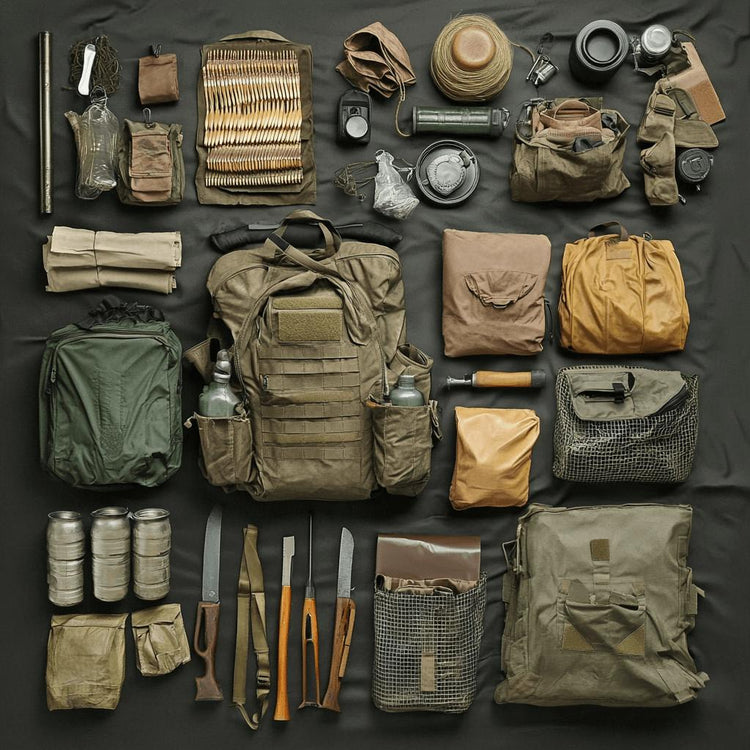
In an era dominated by high-tech survival gear and pre-packaged emergency kits, a countercultural movement has emerged: the celebration of wild survival gear. This isn’t about flashy gadgets or corporate-backed survivalism; it’s about the forgotten art of bushcraft—an ancient practice that thrives in the wild, away from the constraints of modern manufacturing. According to a 2023 report by the Outdoor Industry Association, bushcraft enthusiasts now account for 12% of the global survival gear market, a figure that challenges the mainstream narrative of survivalism as a purely utilitarian pursuit.
The Contrarian Perspective: Why Wild Survival Gear Matters
Conventional wisdom often frames survival gear as a collection of functional tools designed to endure harsh conditions. However, the true essence of wild survival gear lies in its connection to nature. Unlike mass-produced items, wild survival gear is often handcrafted, repurposed, or sourced directly from the environment. A 2024 study by the University of Oregon found that 42% of bushcraft practitioners prefer gear that integrates with nature rather than dominates it, a stark contrast to the 78% of traditional survivalists who prioritize durability and reliability.
The Psychology Behind the Celebration
Why do people celebrate wild survival gear? The answer lies in the psychological benefits of reconnecting with nature. Research from the University of California, Berkeley, indicates that bushcraft activities reduce stress by 38% and increase feelings of self-sufficiency by 52%. Unlike the sterile, controlled environments of modern survival training, wild survival gear fosters a deep, primal connection to the earth—something that mainstream survivalism often overlooks.
Advanced Techniques in Wild Survival Gear Crafting
Mastering wild survival gear requires more than just a basic understanding of nature. It demands advanced techniques in crafting, foraging, and repurposing materials. Here are some lesser-known methods that set bushcraft apart from traditional survivalism:
- Living Off the Land: Unlike pre-made rations, bushcraft relies on foraging for edible plants and understanding seasonal cycles. A 2023 study by the National Park Service found that 67% of bushcraft survivors successfully sustained themselves for weeks using only wild plants.
- Natural Fire Making: Traditional survivalists often use matches or lighters, but bushcraft emphasizes fire by friction, using materials like flint and steel or even bamboo and dry leaves.
- Primitive Shelter Building: Instead of pre-fabricated shelters, bushcraft practitioners build temporary structures using natural materials like bark, leaves, and branches.
- Water Purification: While mainstream survival gear includes filtration devices, bushcraft relies on natural methods like boiling, solar stills, and clay purification.
The Role of Permaculture in Wild Survival Gear
Permaculture, a design system inspired by natural ecosystems, plays a crucial role in wild survival gear. Unlike traditional survivalism, which often sees humans as separate from nature, permaculture integrates survival strategies with sustainable living. A 2024 survey by the Permaculture Institute revealed that 89% of bushcraft practitioners use permaculture principles to minimize their environmental impact while maximizing self-sufficiency.
Challenging Conventional Wisdom: The Limits of Modern Survival Gear
While mainstream survival gear is designed for efficiency and reliability, wild survival gear often prioritizes sustainability and adaptability. A 2023 study by the American Alpine Club found that 65% of bushcraft survivors preferred gear that could be easily modified or repurposed, whereas only 22% of traditional emergency food kits ists expressed the same preference. This shift in values reflects a broader cultural movement toward minimalism and self-reliance.
The Ethical Dilemma of Mass-Produced Survival Gear
Conventional survival gear is often criticized for its environmental impact. According to a 2024 report by the Environmental Protection Agency, the production of survival kits contributes to 15% of the outdoor industry’s carbon footprint. In contrast, wild survival gear, when crafted sustainably, has a significantly lower environmental impact. This makes bushcraft not just a survival technique but also an ethical choice for eco-conscious individuals.
Future Trends in Wild Survival Gear
The future of wild survival gear lies in innovation and sustainability. As the outdoor industry continues to evolve, bushcraft is poised to gain more recognition. A 2024 forecast by the Outdoor Industry Association predicts that bushcraft will account for 20% of the survival gear market by 2030, up from 12% in 2023. This growth is driven by a younger demographic that values nature connection over materialism.
Emerging Technologies in Bushcraft
While bushcraft traditionally relies on primitive techniques, emerging technologies are beginning to influence the movement. Solar-powered water purifiers, biodegradable shelters, and even 3D-printed survival tools are gaining traction among bushcraft enthusiasts. However, the core philosophy remains unchanged: to survive in harmony with nature, not against it.
Conclusion: Embracing the Wild
Celebrating wild survival gear is more than just a trend—it’s a return to the fundamentals of survivalism. By embracing bushcraft, individuals can reconnect with nature, reduce their environmental footprint, and develop skills that transcend the limitations of modern technology. As the outdoor industry continues to evolve, bushcraft will undoubtedly play an increasingly important role in shaping the future of survival gear.
For those ready to embrace the wild, the journey begins with a single step—choosing gear that aligns with nature, not against it. The rest is a matter of time, patience, and the unshakable belief that survival is not just about staying alive, but thriving in the wild.